
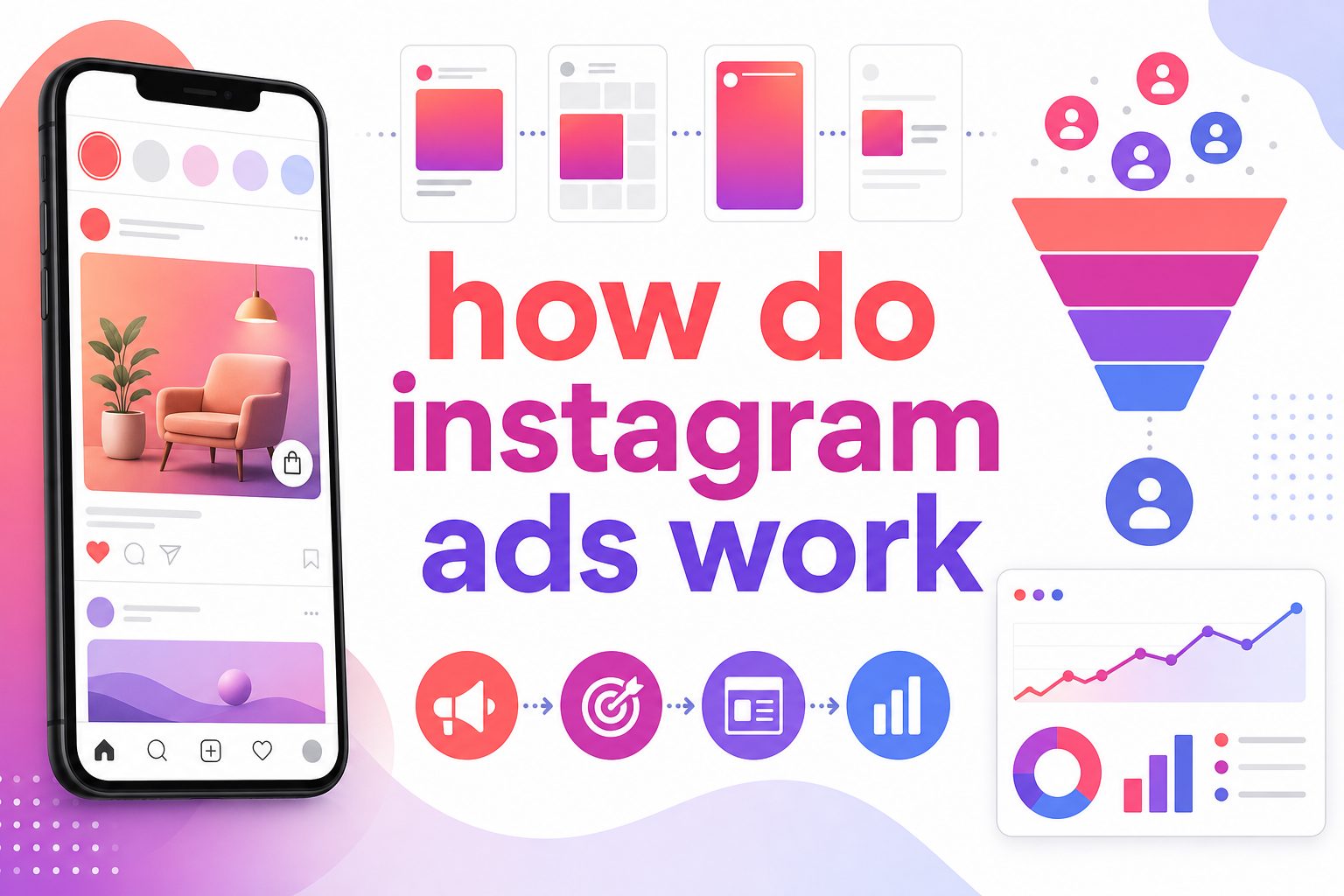
If you have ever wondered how do Instagram ads work, the simple answer is that Instagram uses Meta’s advertising system to show paid posts, Stories, Reels, and shopping placements to people who are most likely to care about them. Businesses choose a goal, define an audience, upload creative, set a budget, and let the platform deliver ads based on signals such as user interests, behavior, demographics, and engagement history. For users, Instagram ads look similar to regular content, but they include labels such as sponsored and often have a call to action. For advertisers, they can be a powerful way to build awareness, drive traffic, generate leads, increase sales, and retarget people who already know the brand. This guide explains how Instagram ads work from strategy to setup, including targeting, bidding, formats, examples, mistakes, best practices, and frequently asked questions.
How Instagram Ads Work
Instagram ads work through Meta Ads Manager, the same advertising platform used for Facebook. Advertisers create campaigns, choose objectives, define who should see the ads, and pay when users view, click, message, or convert depending on the campaign setup.
1. Campaign Objectives Guide Delivery
Every Instagram ad starts with a campaign objective. This tells the platform what result matters most, such as awareness, traffic, engagement, leads, app promotion, or sales. Instagram then uses that goal to decide which users are most likely to take the desired action.
2. Audience Targeting Controls Reach
Advertisers can target people based on location, age, gender, interests, behaviors, custom audiences, and lookalike audiences. The more relevant the audience is, the better the ad usually performs because the message reaches people with a stronger reason to care.
3. Creative Influences Performance
The image, video, caption, headline, and call to action all affect results. Instagram is a visual platform, so ads need to feel native, clear, and interesting quickly. Strong creative often matters as much as targeting because users scroll fast.
4. Budget And Bidding Shape Results
Advertisers set a daily or lifetime budget, and Instagram uses an auction system to compete for placements. The platform considers bid, estimated action rate, and ad quality. This means the highest spender does not always win every impression.
5. Placements Decide Where Ads Appear
Instagram ads can appear in Feed, Stories, Reels, Explore, search results, profile feeds, and shopping areas. Advertisers can allow automatic placements or choose specific locations. Automatic placements often help the system find cheaper and more effective opportunities.
6. Measurement Tracks What Happened
After launch, advertisers review metrics such as reach, impressions, clicks, cost per result, conversions, engagement rate, and return on ad spend. These numbers show whether the campaign is reaching the right audience and whether the offer is strong enough.
Why Instagram Ads Matter
Instagram ads matter because they combine visual discovery with precise advertising tools. People use Instagram to explore brands, products, creators, trends, and local businesses, which makes it useful for both awareness and direct response campaigns.
- Visual Attention: Instagram is built around images and videos, making it ideal for brands that can show products, transformations, experiences, or lifestyle value clearly.
- Advanced Targeting: Advertisers can reach broad audiences or specific groups using Meta’s data, custom audiences, and lookalike modeling.
- Flexible Budgets: Businesses can start small, test different ads, and increase spend only when results justify it.
- Multiple Goals: Campaigns can support brand awareness, website traffic, lead generation, app installs, messages, catalog sales, and retargeting.
- Native Ad Formats: Ads appear inside the same environments where people already watch Reels, browse Stories, and scroll through Feed content.
Instagram Ad Formats Explained
Different Instagram ad formats work better for different goals. Choosing the right format helps your message fit the way people naturally use each part of the platform.
1. Feed Ads
Feed ads appear between regular posts as users scroll. They can use images, videos, carousels, or collections. Feed ads are useful for explaining offers, showing product benefits, and encouraging clicks because users are already in a browsing mindset.
2. Stories Ads
Stories ads appear full screen between user Stories. They work well for short, direct messages, limited-time offers, behind-the-scenes content, and quick calls to action. Because the format is immersive, the first second needs to create immediate interest.
3. Reels Ads
Reels ads appear between short-form videos and often perform best when they look like organic entertainment or creator-style content. They are useful for reach, awareness, product demonstrations, and trend-based messaging that feels fast and natural.
4. Carousel Ads
Carousel ads let users swipe through multiple images or videos. They are helpful for showing several products, explaining steps, comparing features, or telling a short visual story. Each card can support a different benefit while keeping one campaign message.
5. Collection Ads
Collection ads combine a main creative asset with product tiles, making them useful for ecommerce brands. They help users browse items directly from the ad experience and can shorten the path between product discovery and purchase intent.
6. Explore Ads
Explore ads appear where users actively search for new content. This placement can help brands reach people in a discovery mindset. It works well when the creative connects to trends, interests, aesthetics, or categories users are already exploring.
How Instagram Ad Targeting Works
Targeting is one of the main reasons Instagram ads can be effective. The platform uses advertiser settings and user signals to match ads with people who are more likely to respond.
1. Core Audience Targeting
Core audiences are built from basic settings such as location, age, gender, language, interests, and behaviors. This is useful for new advertisers because it gives direct control over who sees the campaign while still allowing the system to optimize delivery.
2. Custom Audience Targeting
Custom audiences let advertisers reach people who already interacted with the business. This can include website visitors, customer lists, app users, Instagram engagers, or people who watched videos. These audiences often perform well because they are already familiar with the brand.
3. Lookalike Audience Targeting
Lookalike audiences help advertisers find new people who resemble existing customers or engaged users. Instagram studies the source audience and looks for shared patterns. A strong source audience, such as recent buyers, usually creates a better lookalike audience.
4. Retargeting Audiences
Retargeting shows ads to people who showed interest but did not take the final action. For example, a user may visit a product page, add an item to cart, or watch a video. Retargeting keeps the brand visible during the decision process.
5. Advantage Targeting Options
Meta offers automated targeting tools that expand audiences when the system finds likely opportunities. These options can improve delivery, especially when the original audience is too narrow. They work best when campaigns have enough data and clear conversion signals.
6. Audience Exclusions
Exclusions prevent ads from showing to people who should not receive them. A brand may exclude recent buyers from prospecting campaigns or exclude existing leads from lead generation ads. Good exclusions reduce waste and make reporting easier to interpret.
How To Create Instagram Ads
Creating Instagram ads is a structured process. The exact settings may vary by account, but the basic workflow stays the same for most businesses and campaign types.
- Choose A Campaign Objective: Pick the result you want, such as awareness, traffic, leads, engagement, or sales.
- Define Your Audience: Select locations, demographics, interests, custom audiences, or lookalike audiences based on your ideal customer.
- Set Your Budget: Decide how much you want to spend daily or across the campaign lifetime.
- Select Placements: Use automatic placements or choose Instagram Feed, Stories, Reels, Explore, and other available options.
- Upload Creative: Add images or videos that fit the placement and communicate the offer quickly.
- Write The Copy: Keep captions clear, benefit-led, and aligned with the action you want users to take.
- Choose A Call To Action: Select a button that matches the goal, such as shop, learn more, sign up, or send message.
- Publish And Review: Launch the campaign, allow time for delivery, then review performance before making changes.
Instagram Ads Cost Factors
The cost of Instagram ads changes based on competition, audience size, campaign objective, creative quality, and conversion difficulty. There is no single fixed price because every ad enters an auction.
1. Audience Competition
Costs usually rise when many advertisers want to reach the same audience. Competitive industries such as fashion, fitness, beauty, real estate, finance, and software may pay more. Narrow audiences can also become expensive if demand is high.
2. Campaign Objective
Awareness campaigns often cost less per impression, while conversion campaigns may cost more because they ask users to take a higher-value action. The more difficult the result, the more important it becomes to have strong creative and a clear offer.
3. Ad Quality
Instagram rewards ads that users are likely to engage with and not hide or ignore. Relevant, polished, and natural-looking creative can reduce costs over time. Poor creative may need more budget to get the same level of performance.
4. Landing Page Experience
For traffic and sales campaigns, the landing page matters. If users click but leave quickly, performance can suffer. A fast, mobile-friendly page with a clear offer, matching message, and simple next step can improve overall campaign efficiency.
5. Seasonality
Ad costs can rise during busy shopping periods, holidays, product launches, and major sales seasons. Planning ahead helps advertisers avoid rushed campaigns and gives them more time to test creative before competition becomes more intense.
6. Campaign Learning
Instagram’s system needs time and data to learn which people respond best. Frequent major edits can restart learning and make costs unstable. Campaigns often perform better when advertisers test carefully and avoid changing too many variables at once.
Benefits Of Instagram Ads
Instagram ads can support many business goals when they are planned well. Their value comes from combining visual storytelling, audience data, and measurable performance in one advertising system.
Brand Visibility: Instagram ads help new audiences discover a business even if they have never searched for it before. This is useful for brands that need demand generation, not only demand capture.
Product Discovery: Ads can show products in real situations, which helps people imagine using them. This is especially useful for fashion, beauty, food, home decor, fitness, travel, and lifestyle categories.
Lead Generation: Businesses can collect interest through forms, messages, or landing pages. This works well for service providers, consultants, courses, local businesses, and higher-ticket offers that require follow-up.
Sales Growth: Ecommerce brands can use Instagram ads to promote products, retarget shoppers, and send traffic to product pages. Catalog and shopping-related formats can make the path to purchase smoother.
Audience Testing: Ads reveal which messages, visuals, products, and offers get attention. These insights can improve organic content, website copy, email campaigns, and future advertising strategy.
Measurable Results: Instagram ads provide data on impressions, clicks, engagement, leads, purchases, and costs. This helps advertisers make decisions based on evidence instead of guessing.
Scalable Campaigns: Once a campaign proves profitable, advertisers can increase budget, broaden audiences, test new creative, and expand placements while monitoring efficiency.
Examples Of Instagram Ads
Examples make it easier to see how Instagram ads work in real marketing situations. The best format depends on the product, audience, and action the advertiser wants.
1. Product Launch Ad
A skincare brand might use a Reel ad to introduce a new serum with a short demonstration, benefit-focused text, and customer-style visuals. The goal could be awareness first, followed by retargeting ads for people who watched most of the video.
2. Local Service Ad
A dental clinic could run Stories ads to people within a specific city, promoting a consultation offer. The ad might use friendly staff visuals, a simple benefit, and a message button so users can ask questions before booking.
3. Ecommerce Retargeting Ad
An online store could show carousel ads to users who viewed products but did not buy. Each card might feature an item the user considered, related products, or a limited offer that gives them a reason to return.
4. Lead Magnet Ad
A business coach could promote a free guide through a lead form campaign. The ad would explain the problem the guide solves, show a simple visual preview, and collect contact details from people interested in learning more.
5. Event Promotion Ad
A fitness studio could advertise an upcoming workshop with Feed and Stories placements. The campaign might target local users interested in wellness and retarget previous website visitors who checked the schedule but did not register.
6. Creator Style Testimonial Ad
A software brand could use a short creator-style video where a customer explains how the tool saves time. This format often feels more natural than a polished commercial and can work well for awareness, consideration, and conversion campaigns.
Common Instagram Ad Mistakes To Avoid
Many Instagram ad problems come from weak planning, unclear creative, or poor measurement. Avoiding these mistakes can save budget and make testing more useful.
1. Starting Without A Clear Goal
If the campaign goal is vague, the platform cannot optimize effectively and the advertiser cannot judge success. Before launching, define whether the campaign should create awareness, drive traffic, generate leads, increase purchases, or build engagement.
2. Targeting Too Narrowly
Very small audiences can limit delivery and raise costs. While relevance matters, Instagram often needs enough room to find people likely to act. A better approach is to start focused but not restrictive, then refine based on performance data.
3. Using Weak Creative
Blurry images, slow videos, generic captions, and unclear offers usually perform poorly. Instagram users make fast decisions, so the creative must communicate value quickly. The first visual moment should explain why the user should keep watching or reading.
4. Ignoring Mobile Experience
Most Instagram users interact on mobile devices, so ads and landing pages must be built for small screens. Slow pages, tiny text, confusing forms, and hard-to-click buttons can waste clicks even when the ad itself performs well.
5. Changing Campaigns Too Often
Constant edits can disrupt learning and make results harder to evaluate. Advertisers should avoid changing budget, audience, creative, and optimization settings all at once. Give campaigns enough time and data before deciding whether they are failing.
6. Measuring The Wrong Metrics
A campaign can get many likes and still fail to produce leads or sales. The right metric depends on the objective. Awareness campaigns need reach and recall signals, while sales campaigns need conversion value, cost per purchase, and return.
Best Practices For Instagram Ads
Good Instagram advertising is part strategy, part creative testing, and part disciplined measurement. These best practices help campaigns become more reliable over time.
1. Match Creative To Placement
Stories and Reels usually need vertical video, fast pacing, and clear text overlays. Feed ads can support more detail, but still need strong visuals. Designing for each placement helps the ad feel native instead of forced.
2. Lead With The Main Benefit
Users should understand the value quickly. Instead of opening with broad brand claims, show the specific outcome, problem solved, or reason to care. A clear benefit gives people a reason to stop scrolling and consider the offer.
3. Test Multiple Creatives
One ad rarely tells the full story. Test different hooks, visuals, captions, formats, and offers. Creative testing helps advertisers learn what the audience responds to and prevents decisions from being based on one weak or lucky ad.
4. Use Retargeting Carefully
Retargeting can be powerful, but showing the same ad too often can annoy users. Build different messages for different stages, such as reminder ads, proof-based ads, and offer-based ads. Watch frequency and performance trends closely.
5. Keep Offers Simple
Complicated offers are hard to understand in a fast feed environment. A strong Instagram ad usually focuses on one product, one promise, one audience, and one next step. Simplicity makes the ad easier to process and act on.
6. Review Results By Objective
Judge each campaign by the goal it was built to achieve. A reach campaign should not be judged like a purchase campaign. Clear evaluation prevents false conclusions and helps advertisers make better budget and creative decisions.
Advanced Instagram Ads Tips
Once you know the basics of how Instagram ads work, advanced improvements come from better structure, stronger testing, and cleaner data. These tips help refine performance.
1. Build A Full Funnel
Instead of expecting one ad to do everything, create campaigns for awareness, consideration, and conversion. A user may first watch a Reel, later see a testimonial, and then receive a retargeting offer when they are closer to buying.
2. Segment Warm Audiences
Not all warm audiences are equal. Someone who watched three seconds of a video is different from someone who added a product to cart. Segmenting audiences helps you write more relevant ads for each level of intent.
3. Refresh Creative Regularly
Even strong ads can lose effectiveness when the same audience sees them too often. Refreshing creative with new hooks, visuals, angles, and proof points helps reduce fatigue while keeping the campaign strategy consistent.
4. Compare New And Returning Users
Prospecting campaigns and retargeting campaigns should be reviewed separately. New users may need education, while returning users may need proof, urgency, or reassurance. Separating them makes performance patterns easier to understand.
5. Improve Conversion Tracking
Accurate tracking helps Instagram learn which users are valuable. Advertisers should make sure key events such as leads, purchases, and sign-ups are measured correctly. Better data usually leads to better optimization and more trustworthy reporting.
6. Analyze Creative Themes
Look beyond individual ads and identify patterns. You may find that demonstrations outperform lifestyle images, testimonials outperform product-only shots, or problem-led hooks outperform discount-led hooks. These insights can guide the next round of creative.
Future Trends In Instagram Ads
Instagram advertising changes as user behavior, privacy rules, creative formats, and automation tools evolve. Advertisers should watch these trends because they affect how campaigns are planned and measured.
1. More Automated Campaign Setup
Meta continues to push automated targeting, placements, budgeting, and creative combinations. This can help advertisers find opportunities faster, but it also makes strong inputs more important. Clear goals, good creative, and accurate tracking still matter.
2. Stronger Short Video Demand
Reels-style content is likely to remain important because users spend significant time with short video. Brands that can create useful, entertaining, or demonstration-based video will often have more creative options than brands relying only on static images.
3. Better Creator Led Advertising
Creator-style ads are becoming more common because they feel native to Instagram. Businesses may work with creators, customers, or internal experts to produce ads that look less like traditional commercials and more like trusted recommendations.
4. Greater Focus On First Party Data
Privacy changes make first party data more valuable. Customer lists, email subscribers, website audiences, and direct engagement signals can help advertisers build stronger campaigns without relying only on broad platform targeting.
5. Improved Shopping Experiences
Instagram is likely to keep refining product discovery and shopping-related ad experiences. Ecommerce brands should prepare by improving product feeds, creative assets, landing pages, and catalog organization so ads can connect smoothly to buying intent.
6. More Creative Testing Pressure
As targeting becomes more automated, creative becomes a bigger performance lever. Advertisers will need more hooks, formats, angles, and proof points. The brands that learn faster from creative tests will have a practical advantage.
Frequently Asked Questions
1. How Do Instagram Ads Work For Beginners?
Instagram ads work by letting beginners choose a goal, audience, budget, placement, creative, and call to action. The platform then enters the ad into an auction and shows it to users likely to respond based on the campaign objective and targeting settings.
2. How Much Do Instagram Ads Cost?
Instagram ad costs vary because pricing depends on audience competition, objective, placement, creative quality, seasonality, and bidding. Some campaigns focus on low-cost reach, while others pay more for leads or purchases. Start with a test budget and measure cost per result.
3. Are Instagram Ads Worth It?
Instagram ads can be worth it when the audience, offer, creative, and tracking are aligned. They are especially useful for visual products, local services, ecommerce, creators, apps, and lead generation. Poor planning, weak creative, or unclear goals can make them wasteful.
4. What Is The Best Instagram Ad Format?
The best format depends on the goal. Reels and Stories are strong for short video and awareness, Feed ads are useful for clear offers, carousel ads work for multiple products, and collection ads can help ecommerce users browse items more easily.
5. Can Instagram Ads Target Specific People?
Instagram ads cannot usually target one individual person directly, but they can target groups based on location, demographics, interests, behavior, and previous interactions. Advertisers can also use custom audiences from customer lists, website visits, engagement, or app activity.
6. How Long Should Instagram Ads Run?
Most campaigns need enough time to gather data before major decisions are made. A small test may run for several days, while larger campaigns may run for weeks. Avoid judging too early unless the ad has clear technical issues or obvious mismatch.
Conclusion
Instagram ads work by combining campaign objectives, audience targeting, creative formats, bidding, placements, and performance tracking inside Meta’s advertising system. When each part is planned well, ads can help businesses increase awareness, engagement, leads, traffic, sales, and customer retargeting.
The best results usually come from clear goals, strong visual creative, relevant audiences, simple offers, accurate tracking, and regular testing. Instagram ads are not automatic success, but they can be a practical and scalable marketing channel when treated as a learning system.